

Custom chocolate boxes wholesale projects need packaging that protects delicate food products while making the brand feel premium at first sight. Chocolate is sensitive to heat, odor, moisture, surface pressure, and presentation quality, so the box must be planned around both product safety and gift value.
For chocolate brands, confectionery shops, bakery gift lines, hotel amenities, holiday collections, and distributors, a custom chocolate box is not just a container. It controls shelf appeal, supports portion arrangement, protects individual pieces, and helps buyers understand the value of the product before tasting it.
JiaCheng Paper Products serves food, chocolate, macaron, candy, tea, gift, and custom paper box categories, which makes the packaging decision more than a printed shell. The right specification should connect food presentation, tray structure, material choice, finishing, production tolerance, and export packing.
Start With the Chocolate Format
Product Shape Controls the Box
A box for truffles, pralines, chocolate bars, macarons, or mixed confectionery requires different internal planning. The product format decides the number of cavities, box depth, tray type, lid structure, and whether inserts are needed to prevent movement during transport.
Wholesale buyers should provide product size, piece count, weight, wrapping method, and storage requirements before asking for a quotation. A box that looks elegant but allows chocolate pieces to shift can damage the visual value of the entire gift set.
The format also affects how the customer reads value. A single premium chocolate bar may need a clean sleeve and strong print surface, while a twelve-piece collection needs accurate spacing, a neat tray, and a lid that opens without disturbing the arrangement. This is why chocolate packaging should be planned from the product layout first.
Choose the Right Box Structure for Food Presentation
Opening Experience Matters
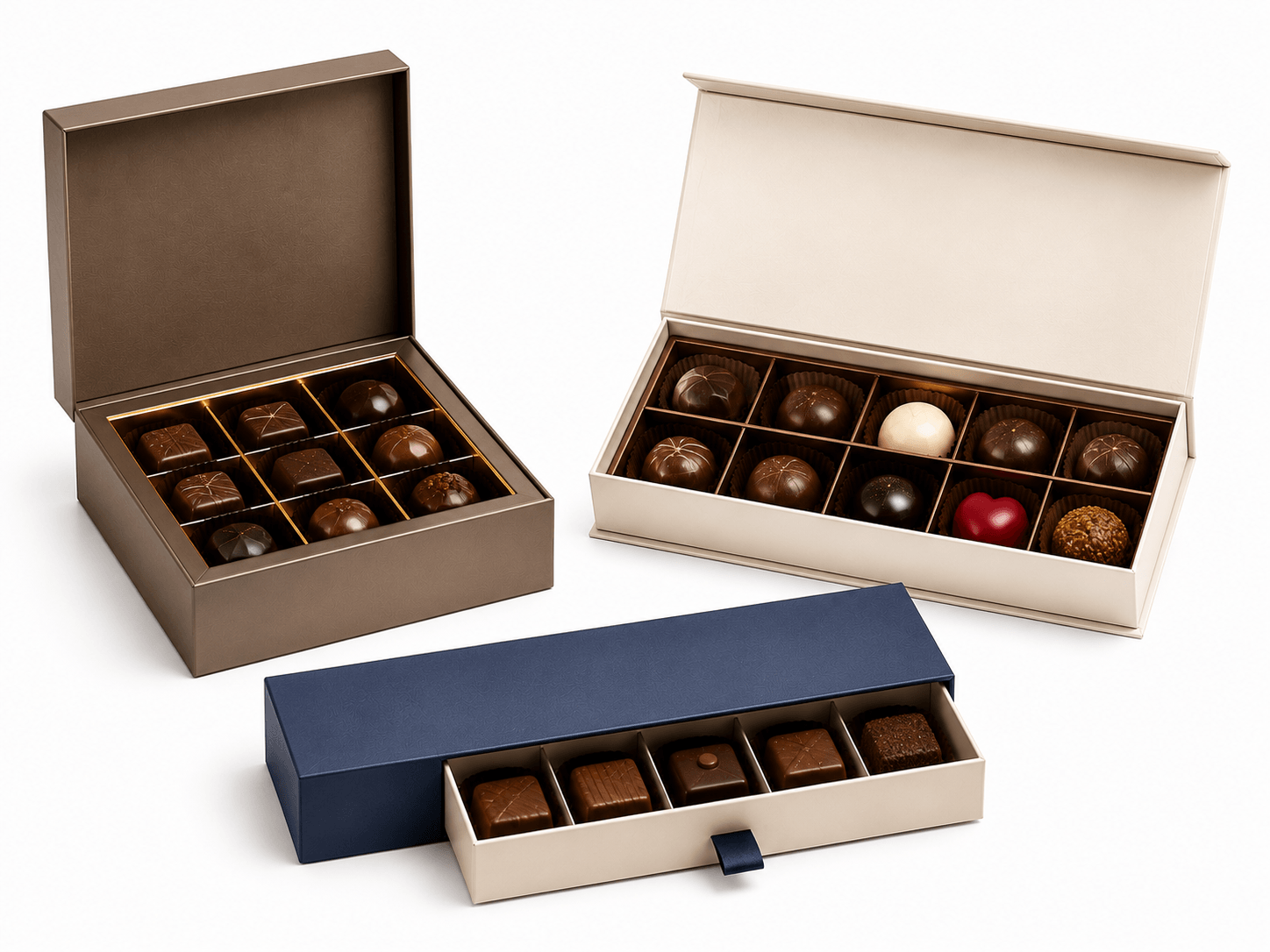
Chocolate packaging often creates a gift moment. Drawer boxes, rigid lid-and-base boxes, magnetic closure boxes, folding cartons, window boxes, sleeve boxes, and compartment boxes all create different unboxing experiences. The structure should match the price point and selling scene.
● Rigid boxes work well for premium gift chocolate collections.
● Drawer boxes can create a refined reveal for truffles or pralines.
● Window boxes help customers see colorful macarons or wrapped chocolate.
● Sleeve structures can support seasonal collections and retail display.
Plan Food-Safe Contact and Inner Protection
The Inside Is as Important as the Outside
Even when chocolate is individually wrapped, the inner structure should be clean, stable, and suitable for food-related packaging. Paper trays, PET trays, blister trays, paperboard dividers, and molded inserts can all be considered depending on product shape and brand positioning.
Buyers should confirm whether the chocolate touches the tray directly or stays inside wrappers. This affects material selection, coating choice, odor control, and the level of cleanliness expected during production and packing.
For premium food brands, inner protection should never feel like an afterthought. The tray color, cavity depth, material thickness, and removal experience all influence how customers judge the chocolate. A stable insert can also reduce product returns caused by broken corners or messy presentation.
Compare Chocolate Box Options by Use Case
A Practical Selection Table
| Packaging Type | Best Use | Buyer Priority |
| Rigid gift box | Luxury chocolate assortments and holiday gifts | Premium feel, strong protection, refined finish |
| Drawer chocolate box | Truffles, pralines, and boutique collections | Smooth opening, tray fit, precise sizing |
| Window paper box | Macarons, candy, and colorful products | Visibility, clean window placement, shelf display |
| Folding carton | Retail chocolate bars and entry-level sets | Cost control, print clarity, efficient packing |
Select Paper, Board, and Surface Finish Carefully
Materials Affect Both Safety and Brand Value
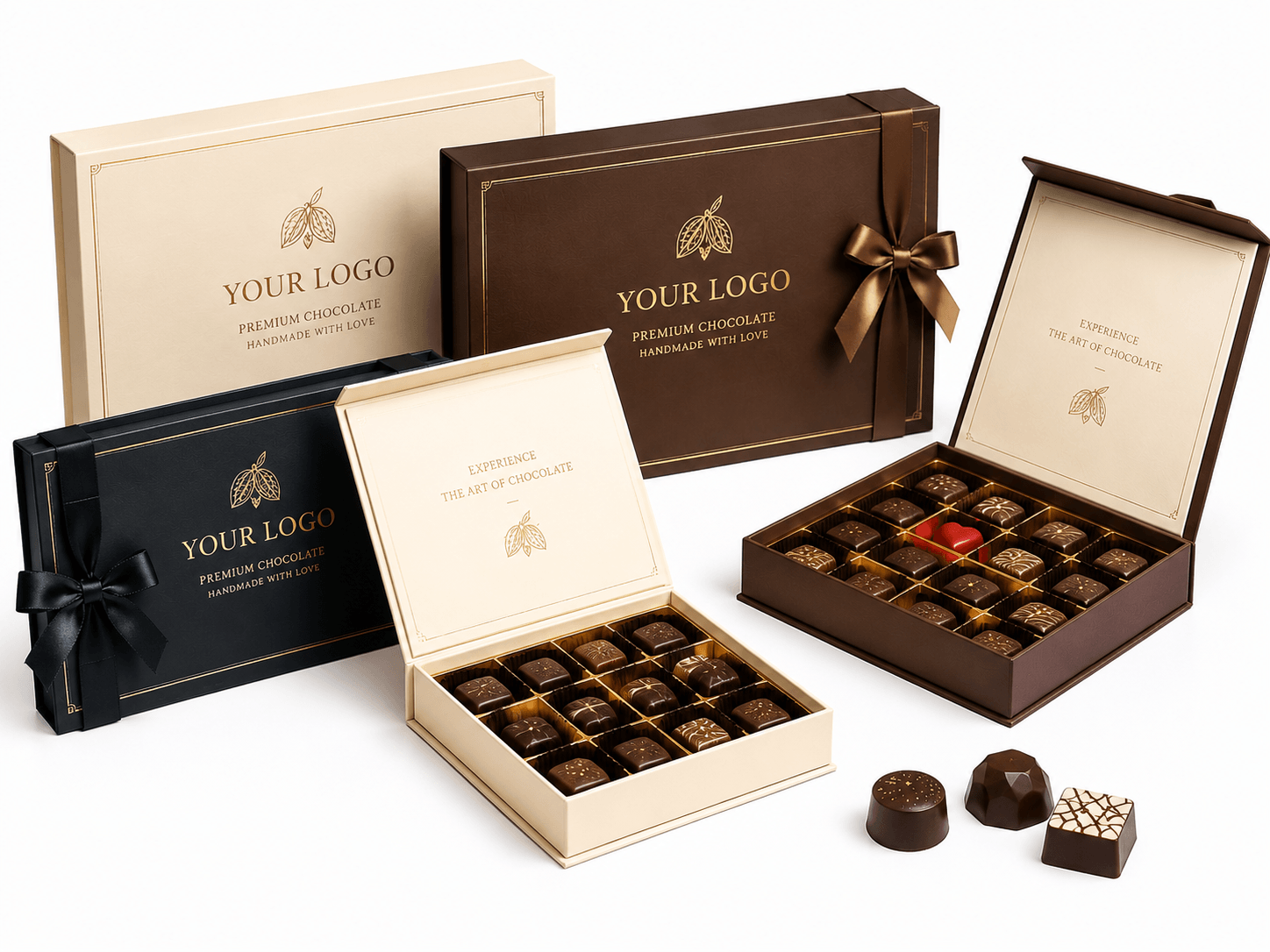
Chocolate boxes can use coated paper, specialty paper, kraft paper, rigid grayboard, food-related paperboard, and different surface treatments. Premium brands may choose soft-touch lamination, foil stamping, embossing, spot UV, or textured paper, while wholesale retail programs may prefer efficient printed cartons.
The material should not transfer unwanted odor to the product. If the box will be packed close to chocolate for a long time, buyers should discuss material suitability, lining, wrapping, and storage conditions with the manufacturer.
Board stiffness should be tested with the full product weight. Chocolate boxes often look small, but multiple pieces, inserts, and decorative components can add pressure to the base. The box must remain square after filling, stacking, and carton transport.
Use Printing to Create Appetite and Trust
Color Must Look Delicious, Not Artificial
Food packaging color is emotional. Deep brown, cream, gold, red, pastel, black, and seasonal colors can all work, but the design should make the chocolate feel clean and desirable. Poor color control can make premium chocolate look cheap or less fresh.
● Use clear logo placement for brand recognition.
● Choose finishing only where it improves the gift value.
● Keep ingredient or product information readable if included.
● Confirm printed color on the final paper, not only on screen.
Confirm Wholesale Production Details Early
Bulk Orders Need Stable Tolerance
Wholesale chocolate boxes require consistent tray fit, lid fit, folding accuracy, and surface quality. Small size errors can make inserts too tight or too loose. Before mass production, buyers should approve a physical sample with real products or product dummies.
For seasonal food packaging, timing is critical. Holiday chocolate campaigns, corporate gifts, and festival collections often have fixed delivery windows, so artwork approval, sample review, production, inspection, and shipping should be scheduled early.
A useful wholesale specification should record box size, tray layout, material, finishing, print color, carton quantity, and packing method. When the product becomes a repeat order, these records help the next production run stay consistent.
Inspect Boxes Before Food Brand Shipment
Quality Control Should Include Function
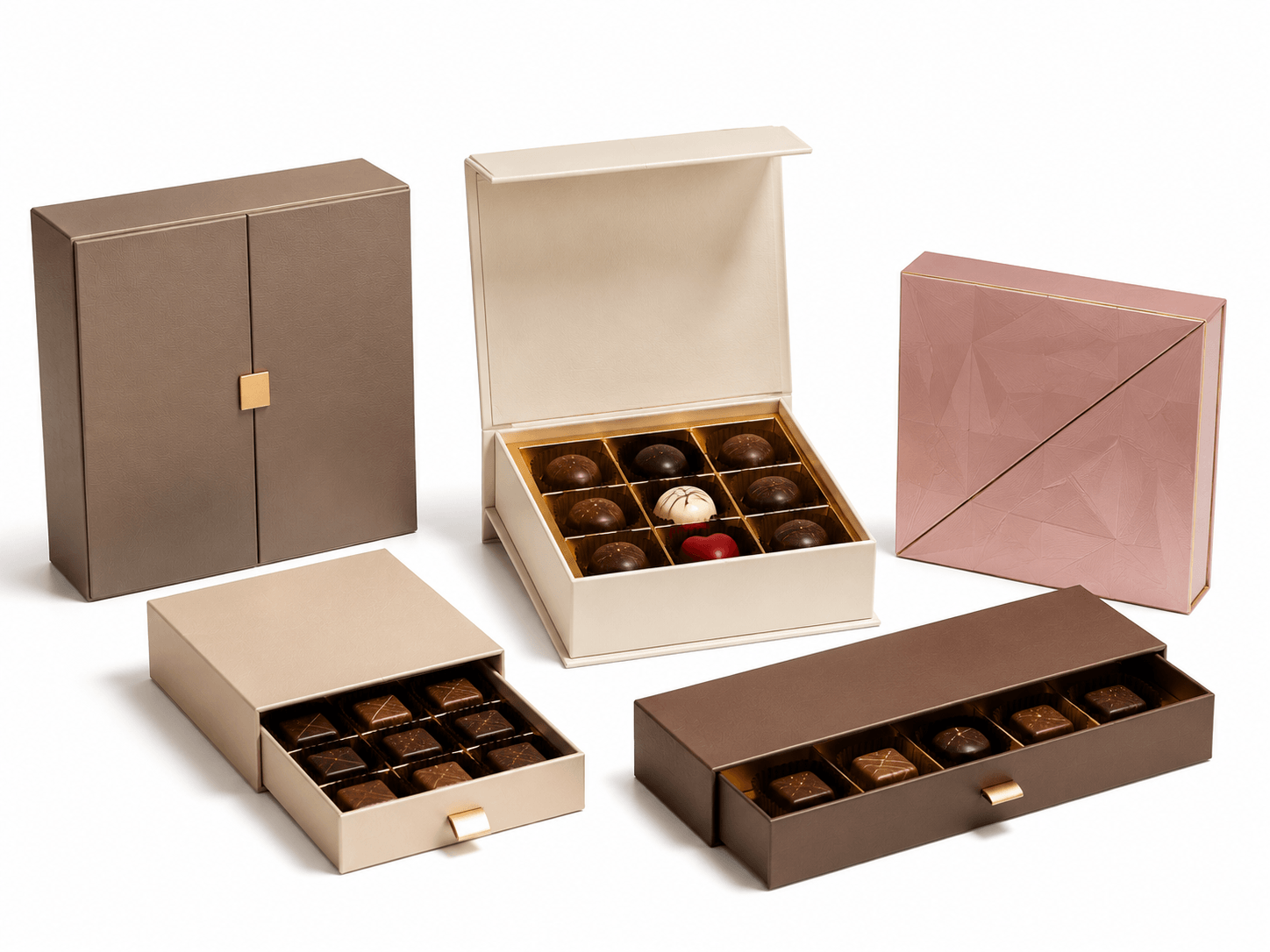
Inspection should include print surface, glue position, lid fit, tray fit, insert cleanliness, carton packing, and whether the box protects the chocolate arrangement. A premium chocolate box should arrive clean, square, odor-free, and ready for retail packing.
For wholesale orders, inspection should cover several cartons rather than only one beautiful sample. Buyers should check whether the same tray fit, lid tension, color result, and surface cleanliness appear consistently across the batch. This is especially important for chocolate brands selling through retail stores, hotels, and seasonal gift channels.
● Check if the inner tray holds each chocolate piece securely.
● Review whether the lid opens smoothly and closes properly.
● Inspect surface scratches, glue marks, and color consistency.
● Confirm export cartons protect corners and premium finishes.
Conclusion
Custom chocolate boxes wholesale orders require careful planning across product format, food-related material choices, inner protection, print quality, finishing, production tolerance, and delivery timing. A good box protects the chocolate and makes the product feel more valuable before the customer opens it.
JiaCheng Paper Products can support chocolate and food brands with custom paper box structures, rigid gift boxes, window boxes, tray options, printing, finishing, sampling, production control, and export packing for premium food packaging projects. With a clear brief and real product testing, wholesale chocolate packaging can be both attractive and reliable.
FAQ
What are custom chocolate boxes wholesale used for?
They are used for chocolate assortments, truffles, pralines, chocolate bars, macarons, candy sets, holiday gifts, corporate gifts, and premium food retail packaging.
Which box structure is best for chocolate packaging?
Rigid boxes, drawer boxes, window boxes, sleeve boxes, and folding cartons can all work. The best choice depends on chocolate format, price point, display method, and protection needs.
Can chocolate boxes include custom trays?
Yes. Buyers can use paper trays, PET trays, blister trays, dividers, and other inserts depending on product shape, wrapping method, and presentation requirements.
What should buyers prepare before ordering?
Prepare product dimensions, piece count, product weight, wrapping method, artwork, material preference, tray requirements, order quantity, delivery date, and shipping destination.
Post time: Jul-02-2026


