

Eco-friendly paper packaging is no longer a small design preference. For gift, cosmetic, food, jewelry, apparel, and retail brands, buyers now need packaging that looks professional while also supporting clearer material choices, plastic reduction, recyclability, and more responsible sourcing.
The strongest eco packaging strategy begins with real specifications, not vague green language. FSC paper options, kraft paper, recyclable paperboard, reduced lamination, paper-based inserts, and efficient box structures can all help, but each choice has tradeoffs in strength, print result, surface feel, cost, and availability.
JiaCheng Paper Products offers custom paper boxes across gift, cosmetic, food, chocolate, jewelry, tube, wine, and paper bag categories, so eco-friendly packaging should be matched to the product rather than treated as one universal brown box solution.
Define the Environmental Goal Before Choosing Material
Eco-Friendly Has Different Meanings
Some brands want FSC paper options. Some want recyclable box structures. Some want kraft paper with a natural surface. Others want to reduce plastic trays or remove unnecessary lamination. The buyer should define the goal first, because each goal changes the material and production decision.
● For natural branding, kraft paper may be the strongest visual choice.
● For premium retail, white paperboard with cleaner finishing may work better.
● For food packaging, inner contact and cleanliness requirements must be reviewed.
● For cosmetics, color accuracy may matter as much as material story.
Compare FSC, Kraft, and Recyclable Paper Options
Material Choice Should Match Product Use
| Option | Best For | Important Buyer Check |
| FSC paper option | Brands needing a documented responsible paper source option | Confirm availability, certification scope, and order quantity |
| Brown kraft paper | Natural gift boxes, food boxes, and casual retail packaging | Check print contrast and surface consistency |
| White kraft paper | Clean retail boxes with a recyclable paper feel | Check color accuracy and stiffness |
| Recyclable paperboard | Gift boxes, folding cartons, and retail packs | Review coating, lamination, and local recycling expectations |
Avoid Greenwashing in Packaging Claims
Clear Claims Build Trust
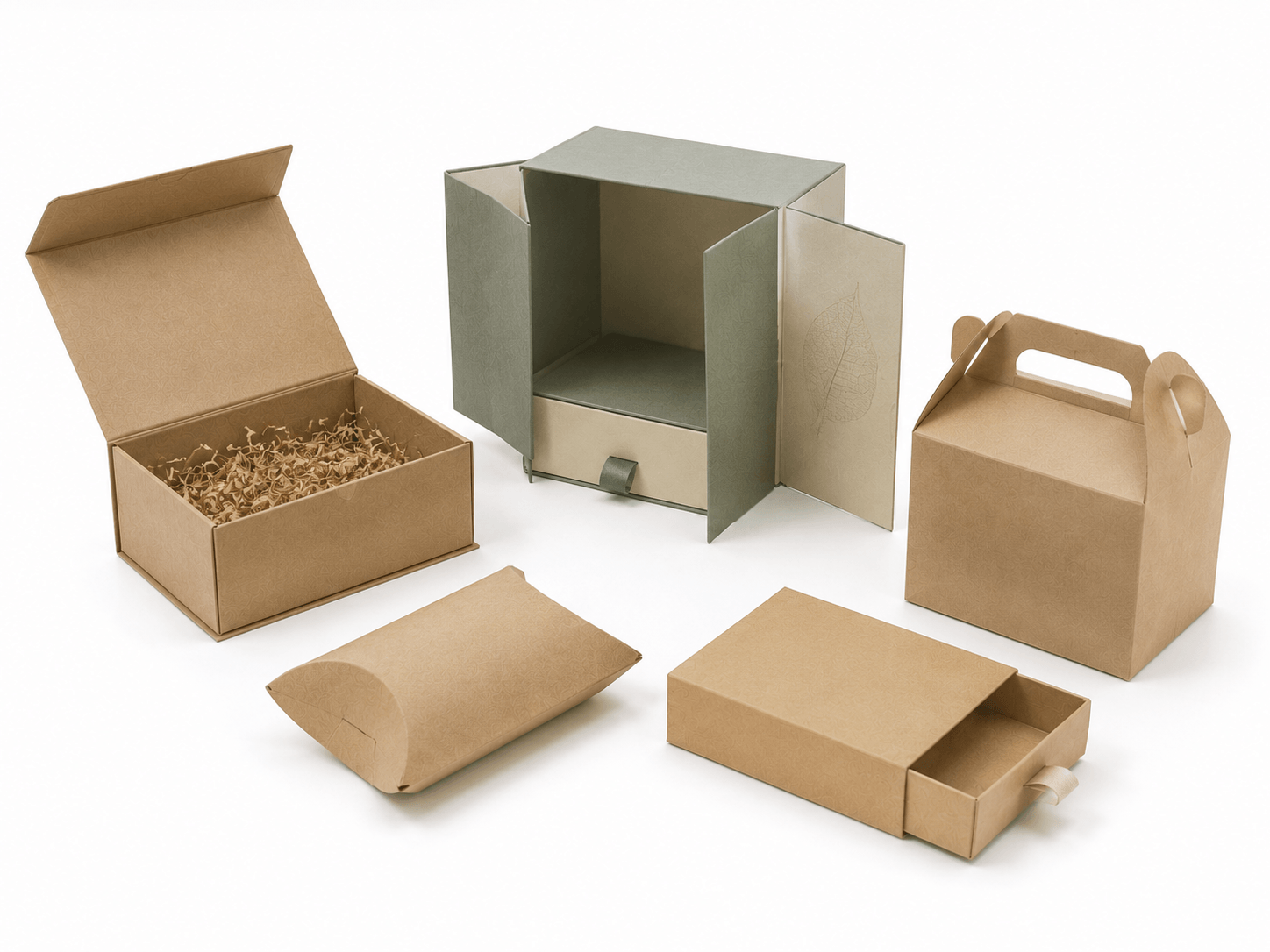
A responsible package should not make promises the material cannot support. Buyers should avoid broad claims unless the specification can verify them. Instead, packaging copy can describe the material, paper source option, recyclability goal, or plastic-reduction design in a simple and accurate way.
The design should also avoid using environmental symbols that are not approved for the project. A clean statement supported by the actual order specification is more useful than decorative green icons.
For international buyers, wording should also be easy to understand across markets. A short material statement, a reuse suggestion, or a clear paper-based packaging message can work better than a crowded paragraph of environmental promises.
Design the Structure to Reduce Waste
Efficient Structure Is Part of Sustainability
Eco-friendly paper packaging is not only about material. Oversized boxes, unnecessary inserts, heavy decorative layers, and inefficient shipping cartons can create waste even when the paper itself is responsible. Good structural design helps reduce excess material while still protecting the product.
A well-fitted box can reduce empty space, improve carton efficiency, and make the product feel more intentional. This is especially important for gift boxes and cosmetic boxes, where a large empty interior can weaken both sustainability and perceived quality.
● Use accurate product dimensions before designing the box.
● Avoid deep empty space inside gift boxes.
● Choose paper inserts when they can replace plastic components.
● Consider flat-packing or efficient carton packing when possible.
Keep Printing and Finishing Compatible With the Goal
Premium Can Still Be Restrained
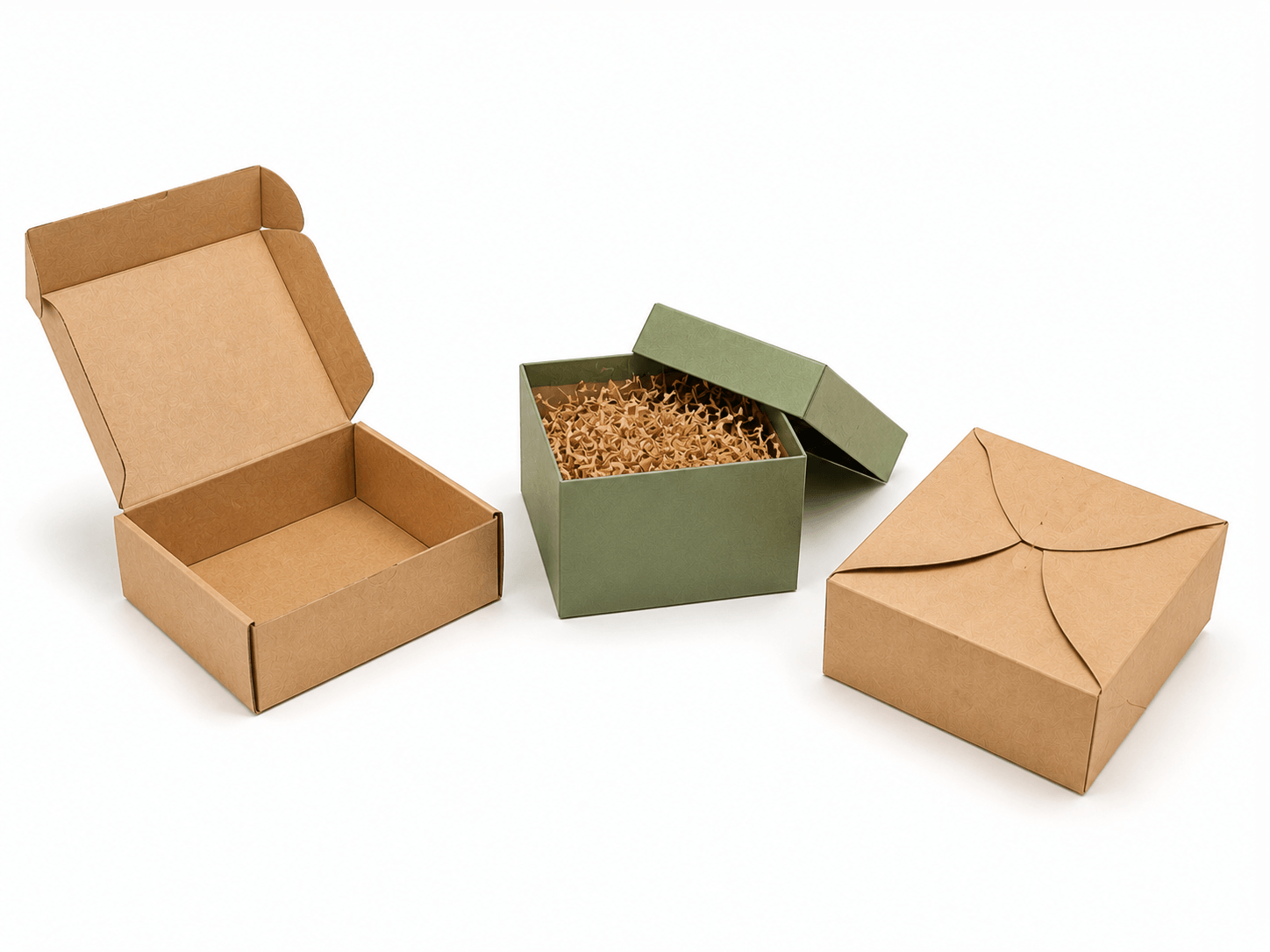
Eco-friendly packaging does not need to look plain, but finishing should be intentional. Heavy lamination, metallic effects, and mixed materials may reduce recyclability or make the packaging harder to explain. Many brands can create a premium look through good typography, paper texture, limited color, embossing, or carefully placed foil.
If a premium surface is required, buyers should ask how the finish affects cost, recyclability, durability, and production timing.
A restrained design can still look high-end when the paper texture, logo position, color balance, and structure are handled well. This is often more convincing than adding many finishing layers that conflict with the environmental message.
Match Eco Packaging to Product Category
One Material Does Not Fit Every Product
A cosmetic box may need better color control than a kraft food box. A jewelry box may require a premium interior. A chocolate box may need a clean tray and odor control. A gift box may need a stronger rigid board. The environmental decision should respect the product’s real protection and presentation needs.
JiaCheng’s product range makes this matching process important because gift boxes, food boxes, cosmetic boxes, and jewelry boxes each require a different balance of sustainability, structure, and branding.
For example, a kraft paper food box may work well with simple one-color printing, while a beauty gift box may need a cleaner white board and subtle embossing. Both can support responsible packaging when the structure and material are chosen honestly.
Review Supplier Capability for Responsible Packaging
Ask for Practical Guidance
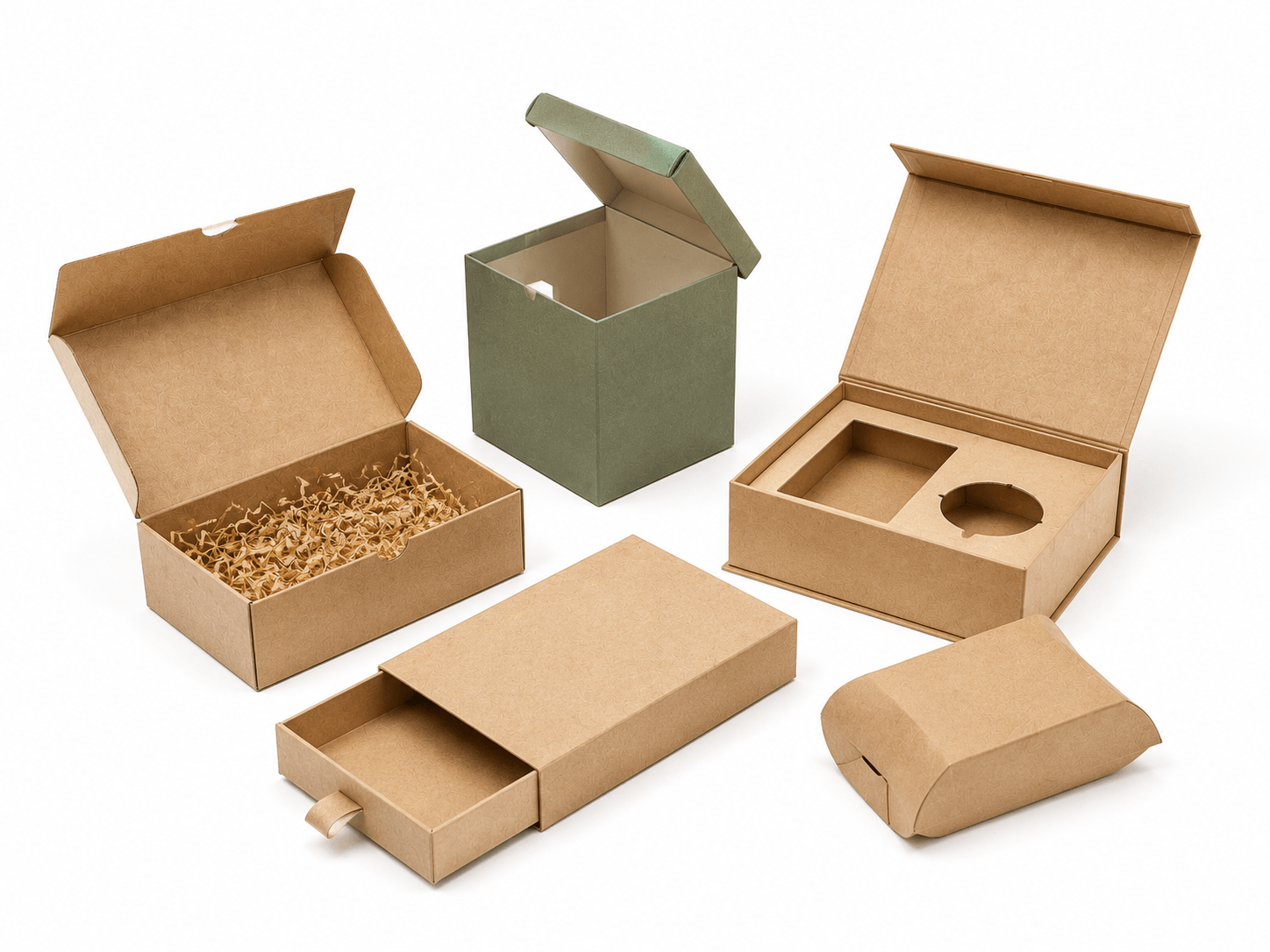
A capable packaging supplier should help buyers compare paper options, structure choices, printing methods, finishing tradeoffs, sample results, and packing methods. The supplier should also explain what can be produced consistently at the required quantity.
Supplier experience matters because sustainable packaging often involves tradeoffs. A professional factory should be able to explain when kraft paper is suitable, when white paperboard is better, when lamination should be limited, and how to keep the final box strong enough for real shipping and retail handling.
● Ask whether the proposed paper is suitable for the box structure.
● Confirm whether the finish supports the environmental goal.
● Request a physical sample before bulk production.
● Check export packing so boxes arrive clean and undamaged.
Prepare a Better Eco Packaging Brief
Better Inputs Create Better Results
Before requesting a quotation, buyers should prepare product dimensions, weight, selling channel, packaging goal, preferred paper type, print requirements, finishing limits, order quantity, delivery schedule, and any specific material claims. This helps the supplier recommend a realistic solution instead of guessing.
A clear brief also reduces revisions. When the environmental goal, product protection requirement, and brand style are aligned early, the sample process becomes faster and more accurate.
Buyers should also decide which points are flexible. If the paper source is fixed, the structure or finish may need adjustment. If the budget is fixed, the supplier may recommend a simpler box or a more available material.
Conclusion
Eco-friendly paper packaging works best when material choice, structure, printing, finishing, claims, and logistics are planned together. FSC paper options, kraft paper, recyclable paperboard, and paper-based inserts can all support responsible packaging when matched to the product and brand position.
JiaCheng Paper Products can help buyers develop custom eco-friendly paper packaging for gift, cosmetic, jewelry, food, chocolate, retail, and paper box projects with material guidance, sampling, production control, and export packing. The strongest result is packaging that communicates responsibility without sacrificing product protection or brand value.
FAQ
What is eco-friendly paper packaging?
It is paper-based packaging designed with more responsible material choices, recyclable structures, plastic reduction, FSC paper options, kraft paper, or reduced unnecessary finishing.
Is kraft paper always the best eco packaging material?
Not always. Kraft paper works well for natural branding, but white paperboard, recyclable paperboard, or FSC paper options may be better for premium printing or product-specific needs.
Can eco-friendly packaging still look premium?
Yes. Premium results can come from strong structure, good paper texture, clean printing, embossing, limited foil, and thoughtful design rather than excessive decoration.
What should buyers confirm before ordering eco packaging?
Confirm product dimensions, paper type, structure, finishing limits, environmental claims, sample approval, quantity, delivery time, and export packing method.
Post time: Jul-08-2026


