

Custom packaging cost depends on more than box size. Buyers often ask for a quick unit price, but a reliable quotation is shaped by structure, material, printing, finishing, inserts, order quantity, sampling, packing, and delivery requirements. Two boxes with similar dimensions can have very different costs if their board, surface finish, tray, or assembly method is different.
For brands buying gift boxes, cosmetic boxes, jewelry boxes, chocolate boxes, advent calendar boxes, magnetic boxes, paper bags, or retail packaging, cost should be evaluated through value and risk, not only the lowest price. A cheaper box can become expensive if it damages the product, delays a launch, or weakens the brand presentation.
JiaCheng Paper Products provides custom packaging across multiple product categories, so the best cost discussion starts with a clear specification and a realistic understanding of what drives price.
First Build a Complete Packaging Specification
A useful cost discussion begins with a complete specification. Buyers should define box type, size, paper, board thickness, printing, finishing, insert needs, packing method, and order quantity before comparing quotes. Without these details, two prices may look different because the suppliers are quoting different products.
A reliable quote should also clarify whether sampling, mold cost, artwork adjustment, carton packing, and freight assumptions are included. These details can change the real project budget even when the factory unit price appears similar.
For growing brands, the specification should also show what can stay stable in future reorders. A box that changes material, size, or print method every time will be harder to price, harder to inspect, and harder to manage as the product line expands.
This is especially important when a brand compares several suppliers. The buyer should not compare a rigid box quotation against a folding carton quotation or a simple printed box against a box with foil stamping and custom inserts.
● Confirm the box structure before asking for unit price.
● Share product weight and product dimensions.
● Separate must-have features from optional decoration.
● Ask suppliers to list quotation assumptions clearly.
Cost Driver Overview for Custom Packaging
Seven Factors Usually Decide the Final Price
| Cost Driver | What It Changes | Buyer Risk |
| Structure | Material use, assembly time, packing volume | Choosing an overbuilt box |
| Material | Strength, surface feel, print result | Comparing different board quality |
| Printing and finishing | Setup, tooling, inspection needs | Adding decoration without value |
| Quantity and logistics | Unit cost, storage, shipping volume | Ordering too little or too much |
Structure and Material Create the Base Cost
The Box Form Comes First
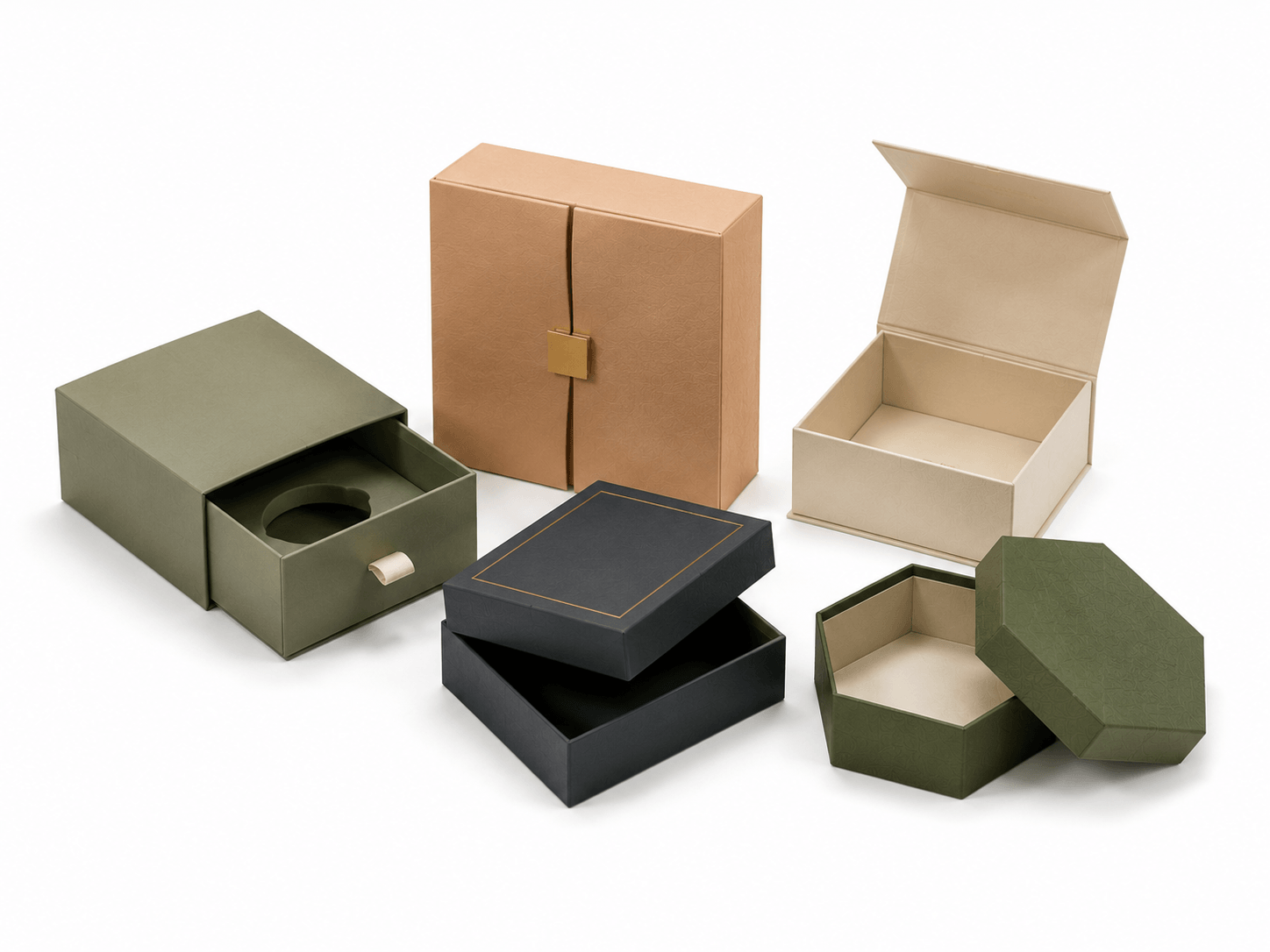
A folding carton, rigid box, drawer box, magnetic box, tube box, window box, and advent calendar box all use different production logic. More complex structures usually require more material, more labor, and more careful quality control.
Material choice then changes both appearance and performance. Grayboard thickness, coated paper, kraft paper, specialty paper, corrugated board, and lining materials should be selected according to product value and protection needs.
For example, a magnetic rigid box may improve the perceived value of a cosmetic or jewelry set, but it also increases board use, assembly work, and packing volume. A well-designed folding carton may be more suitable for retail products that need efficient storage and lower freight cost.
Printing and Finishing Can Raise Cost Quickly
CMYK printing, spot colors, exact color matching, foil stamping, embossing, debossing, spot UV, soft-touch lamination, and special coatings all add value when used correctly. They also add setup time, tooling, and inspection requirements.
Use Finishing Where Customers Notice It
A focused foil logo or embossed brand mark may create enough premium value without covering the entire box with expensive decoration. Cost control should protect the main brand signal instead of removing all visual quality.
Inserts and Trays Should Be Priced Separately
Interior Protection Is Not Free
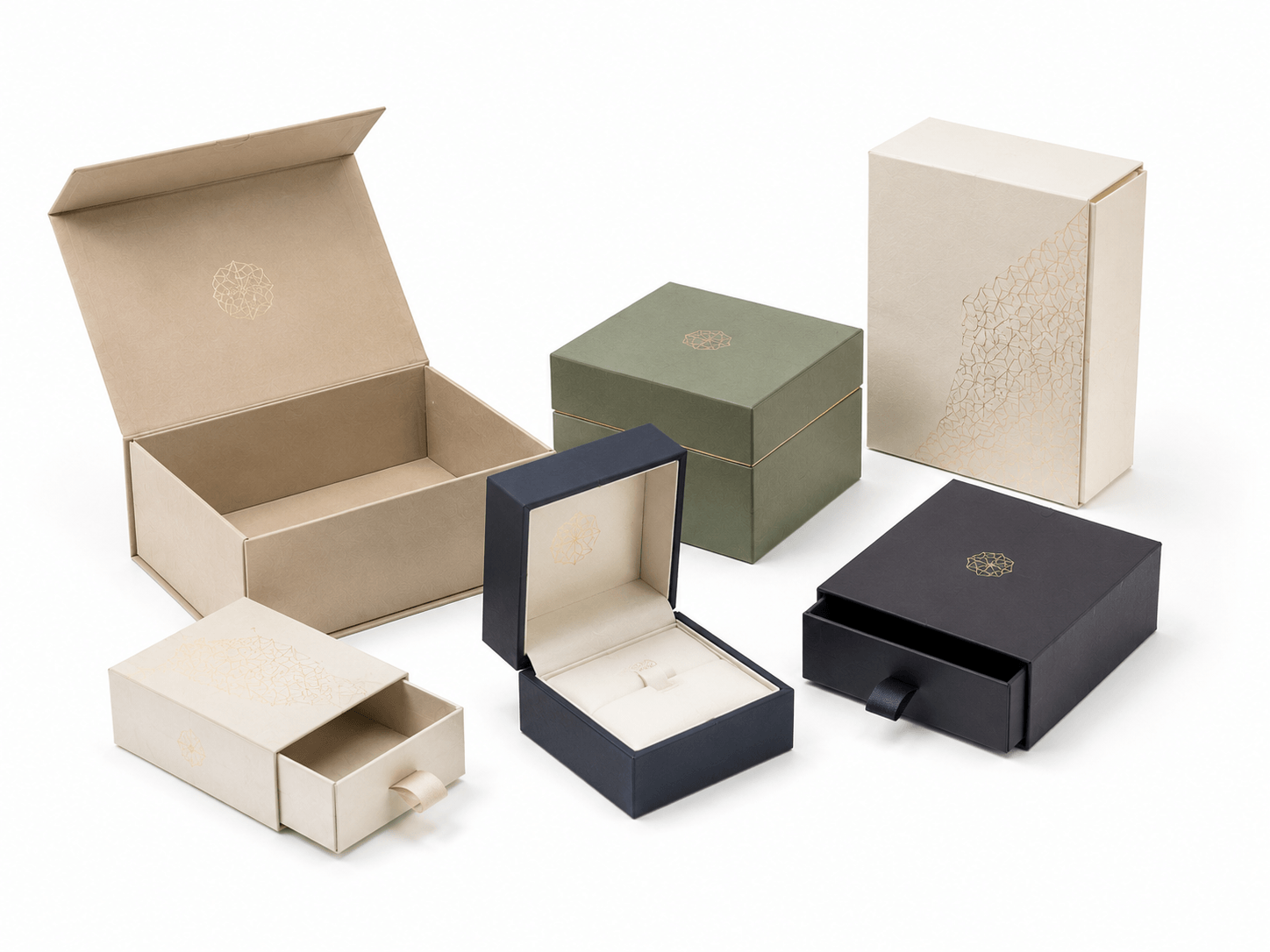
Jewelry boxes, cosmetic gift sets, chocolate boxes, and advent calendars often need inserts, dividers, trays, platforms, or ribbon pulls. These parts can require separate material sourcing and assembly. Buyers should ask whether the quoted price includes the insert or only the outer box.
The insert also affects labor cost. A simple paper divider may be assembled quickly, while a shaped tray, ribbon pull, or multi-level product platform may require more handwork and more inspection time.
● Use paperboard dividers when they can replace complex molded trays.
● Test insert fit with real products before approving bulk production.
● Check whether insert color affects the overall presentation.
● Avoid overspending on inserts that customers never see.
Quantity, MOQ, and Setup Cost Affect Unit Price
Custom packaging usually has setup costs for printing, tooling, sampling, machine adjustment, and material preparation. Small orders spread these costs over fewer units, so unit price is usually higher. Larger orders can reduce unit cost, but storage and cash flow also matter.
A fair comparison should use the same specification at different quantity levels. This helps buyers see whether a higher quantity actually creates meaningful savings.
Sampling, Packing, and Freight Are Part of Real Cost
Do Not Stop at Factory Unit Price
A complete project cost includes sample making, pre-production approval, carton packing, export protection, shipping volume, and delivery schedule. Premium boxes may need stronger cartons or more careful packing, especially when surfaces include foil, lamination, or delicate paper.
For overseas buyers, shipping volume can be a major factor. A box that is beautiful but inefficient to pack can create higher logistics cost.
Buyers should ask how many boxes fit into each export carton and whether the box ships flat or assembled. This simple question can reveal hidden cost differences between two packaging structures.
Control Cost Without Damaging Brand Value
The best way to reduce cost is not to make the box weaker. Buyers can simplify structure, standardize sizes, reduce unnecessary finishing, adjust board thickness, use shared inserts, or plan repeat orders. The features that protect the product and support the brand should remain.
A good cost-control decision removes waste, not value. If a box protects a fragile product, improves shelf appeal, or supports a premium price point, removing that feature may cost more in lost sales or product damage than it saves in production.
● Keep the main logo treatment strong.
● Simplify secondary decoration first.
● Use one structure across several product lines when possible.
● Ask JiaCheng Paper Products for alternative specifications at different budgets.
Conclusion
Custom packaging cost is shaped by structure, material, printing, finishing, inserts, order quantity, sampling, packing, and delivery. The most useful quotation is not always the lowest number; it is the one that clearly matches the product, brand goal, and production requirements.
JiaCheng Paper Products can help buyers compare practical cost options for gift boxes, cosmetic boxes, jewelry boxes, chocolate boxes, advent calendar boxes, magnetic boxes, paper bags, and other custom paper packaging projects. With a complete brief, buyers can control budget while still protecting product value.
FAQ
Why do custom packaging prices vary so much?
Prices vary because box structure, material, thickness, printing, finishing, inserts, quantity, sampling, packing, and delivery requirements can all change the production cost.
How can buyers reduce custom packaging cost?
Buyers can simplify structure, reduce unnecessary finishing, standardize sizes, choose practical materials, plan repeat orders, and request price breaks at different quantities.
Does higher MOQ always mean lower unit price?
Usually larger quantities reduce unit price because setup costs are spread across more units, but buyers should also consider storage, cash flow, and real usage needs.
What information is needed for an accurate quote?
Prepare box size, product weight, structure type, material, printing, finishing, insert needs, order quantity, artwork, delivery schedule, and shipping destination.
Post time: Jul-12-2026


